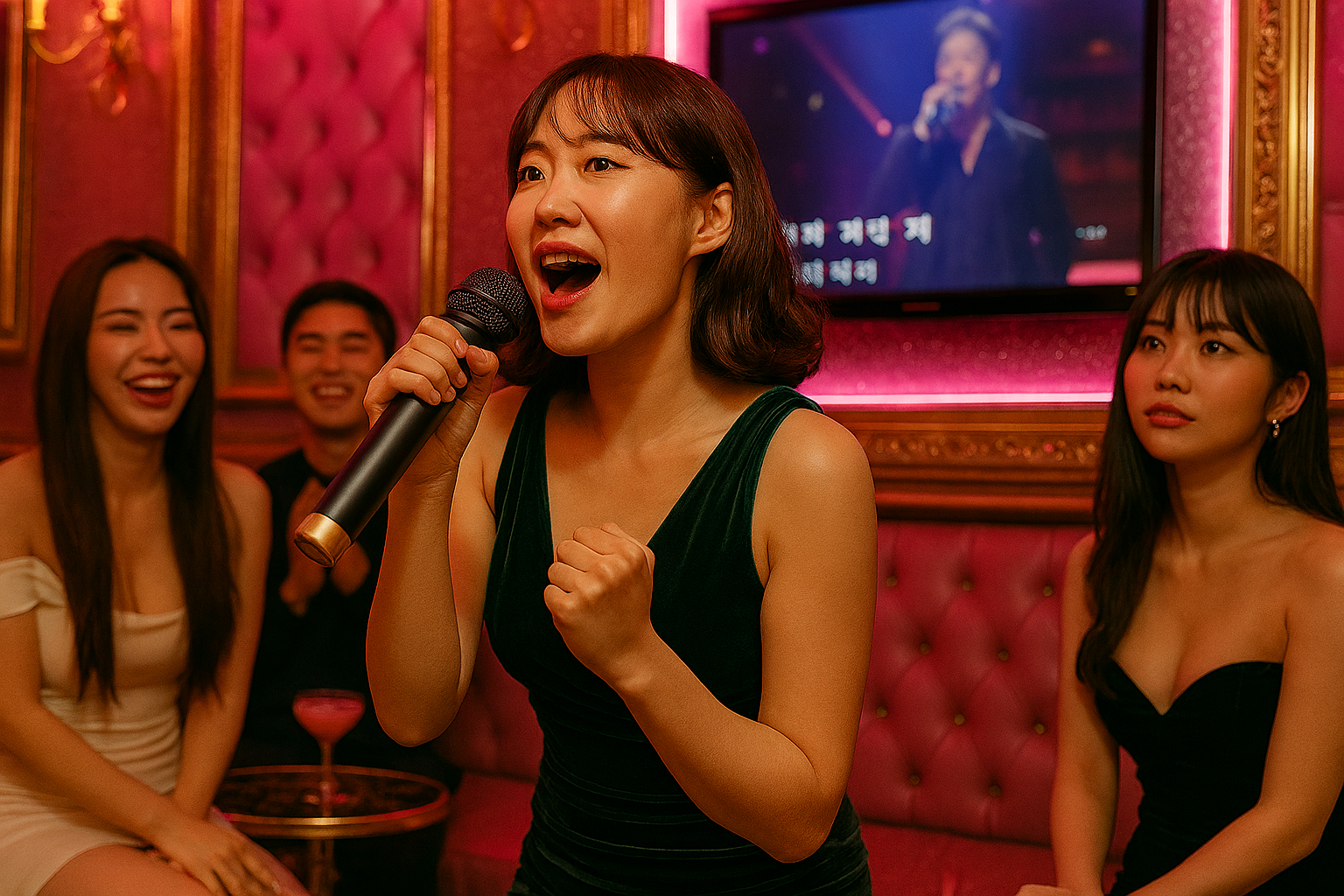
When you arrive in Seoul, the first thing that strikes you is the music everywhere. You can hear it in cafes, in the shops, in the streets, and, most of all, in small private singing rooms, called norebang. Go to highly visited places like Hongdae, Gangnam or Myeongdong and you will come across bright signs asking you to come in and sing your heart out. Norebang is also a popular activity in Seoul and is loved by students, families, workers, and tourists. This is not a boring activity and its history is long.
This article will give you some insight into the origin of norebang, its development, and the reasons it is so relevant to South Korean culture even today.
How Singing Became Part of Korean Life
Koreans had been singing a large proportion of their daily lives long before the modern norebang rooms came into picture. Korean culture had a variety of music, folk songs which were sung by peasants and fishermen, up to royal music performed at a ceremony. Individuals would sing together whenever there was a festival and celebration or even when they were in the community. One of the methods to express emotions, to relieve stress and to unite people was singing.
Thus, when karaoke technology started spreading to Asia, it was not hard to be embraced by Koreans. People already loved to sing and the thought of singing for fun in a non-stressful environment was quite natural.
How Karaoke Arrived in Korea
Karaoke was originally introduced in Japan in the 1970s when instruments of the popular songs started to be played in bars by machines. The concept soon spread to other Asian nations, including South Korea. Initially, Koreans used to have karaoke in open areas such as big restaurants or entertainment halls. These primitive arrangements used to include a microphone, speakers, and a screen with lyrics. But it was not the case with all people who were shy of singing in front of strangers. This gave rise to the concept of designing small rooms where small groups could sing together easily. The idea served as the basis for norebang.
The Start of the Norebang
The term norebang is translated as the singing room in Korean. These are individual singing rooms that were initially found in South Korea in the late 1980s and the early 1990s. The economy of the country was swiftly growing and numerous new entertainment industries were being established. Citizens were working long hours and they required destinations where they could unwind after a hectic day. A perfect escape was found in the norebang rooms.
A norebang usually consisted of a microphone, a television screen displaying the lyrics, and a machine with hundreds of songs. Throughout the years, the technology went overboard with more sound systems, colorful lighting and touch screen menus. By the mid-nineties, norebang was already an ordinary part of the Seoul nightlife and particularly a popular karaoke in Gangnam.
Korean Work Culture and Norebang
The Korean work culture is one of the significant factors that made norebang popular. Workers also participate in group dinners or post-work outings known as hoesik, where colleagues partake in meals, alcohol and connect without going to work. Here, the group usually visits a norebang after such meals. Together singing breaks away the formalities and everybody can relax. It establishes a cordial field to laugh with your boss, congratulate your co-worker or just have fun. This culture ensured that norebang was a significant social venue rather than merely an entertainment venue.
Norebang Experience with Technology
Norebang rooms have now become more comfortable and sophisticated over the years. Most of the destinations now feature good speakers, special effects on echo, and bright neon lights to make it seem like a party. There are even giant-screen rooms or moving graphics in some rooms that make singing more exciting.
Touch-screen song menus enable you to find the songs fast and wireless microphones enable you to move around and dance easily. There are even some norebang businesses that offer snacks, beverages, and themed rooms so that they can have a special atmosphere.
Coin-operated norebang rooms are also available today, in particular in shopping streets and around universities. The smaller rooms allow paying for only one or two songs, so they are ideal for having a quick source of entertainment or relieving stress.